
DOWNLOAD THE APP


Customer Services
Copyright © 2025 Desertcart Holdings Limited
DOWNLOAD THE APP
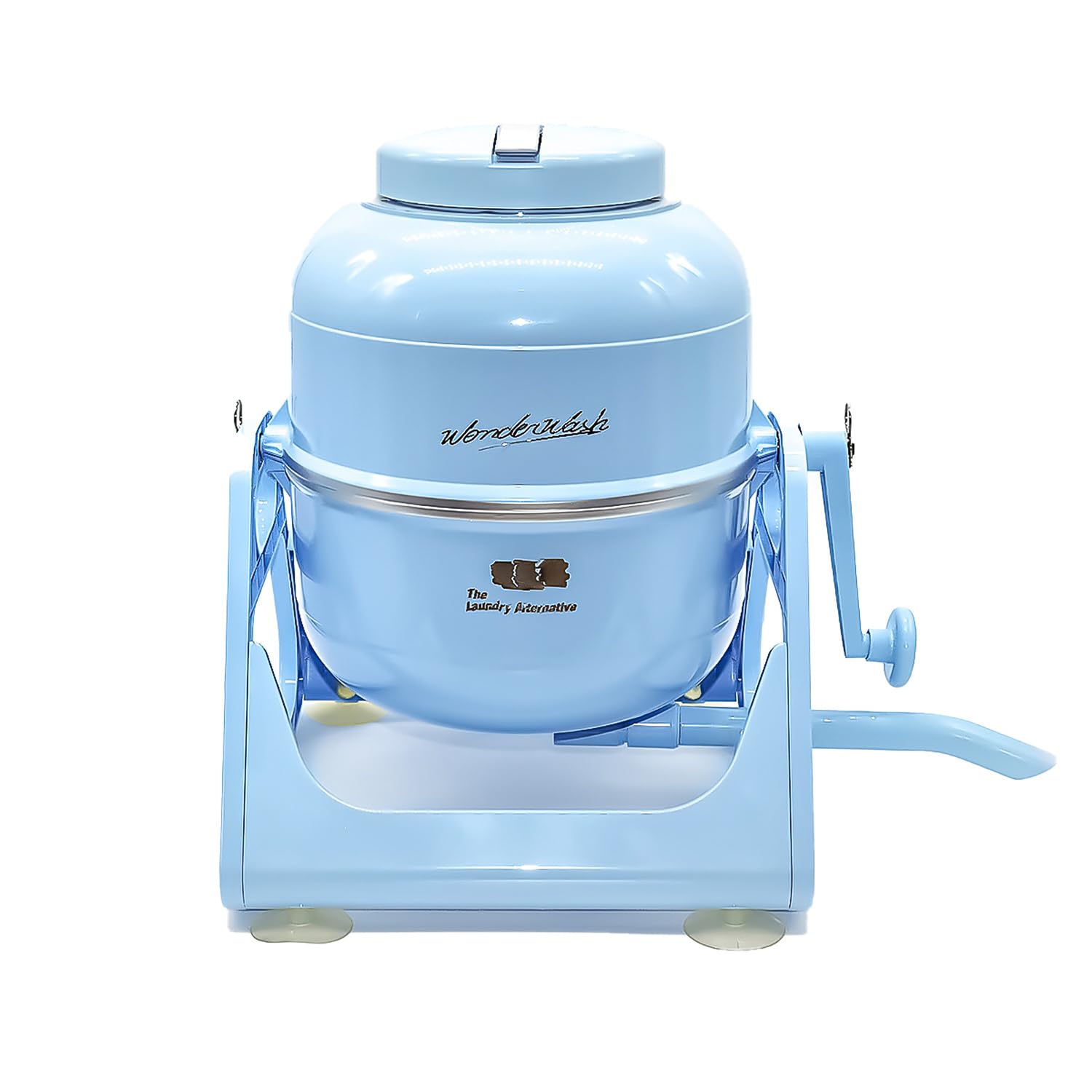
🧺 Crank it, spin it, love it — laundry liberation in your hands!
The WonderWash Portable Washing Machine is a lightweight, manual, non-electric washer designed for small spaces like apartments and RVs. With a compact 12"x12"x16" size and 5-pound capacity, it cleans clothes gently and efficiently in 1-2 minutes using 60 RPM spin speed. Eco-friendly and water-saving, it’s perfect for delicates and reduces your environmental footprint while offering unmatched portability and durability.


| ASIN | B07FTXG5SG |
| Access Location | Top Load |
| Batteries Included? | No |
| Batteries Required? | No |
| Brand Name | The Laundry Alternative |
| Capacity | 5 Pounds |
| Color | Blue |
| Control Console | Knob |
| Customer Reviews | 4.2 4.2 out of 5 stars (2,247) |
| Date First Available | 5 May 2019 |
| Efficiency | Energy Efficiency |
| Fuel type | electric |
| Installation Type | Countertop |
| Item Weight | 2.27 Kilograms |
| Material Type | ABS |
| Max Spin Speed | 60 RPM |
| Model Info | Wonderwash Retro Colors |
| Noise | 50 Decibels |
| Part Number | Wonderwash Retro Colors Blue |
| Product Dimensions | 30.48 x 40.64 x 30.48 cm; 2.27 kg |
| Special Features | Wear-resistant |
| Standard Cycles | 1 |
S**N
Do you crank? I do! If you crank, and crank it good, like me, you will love this little fully-manual washer. Pros: Simple to put the main parts together. Simple to operate, and easy to move from place to place, which makes it easy to store away out of sight. Cons: Some of the smaller pieces, specifically the little covers that fit over the holes in the base, did not ever fit into the holes. No matter how hard I pressed, they wouldn't go in. But they don't seem to be a crucial part of the machine--more for aesthetics than anything. Still, a bit annoying. Next, the barrel is small. If you're only one person you may not mind doing three or four cycles of wash to equal one normal washer full of laundry. The drum fits about 4-1/3 to 4-1/2 gallons of water. Use too much soap and you're done for. You'll be doing multiple rinses just to get it all out. A tablespoon of concentrated soap is more than enough for a full load. Next, full load capacity: Think about one standard size towel, one pair of pants, two t-shirts, a few pair of socks and an equal number of underwear and bras. That's it. Operation: Important first step is to pre-treat all stains first! Once you have pre-treated, fill the drum with one gallon of hot water, add your one tablespoon of soap (1 tsp. if you pretreated with full-strength detergent), lightly tilt the drum back and forth to make the water sudsy, then add two more gallons of hot water. Begin to put your clothes in, and then gauge however much more water you think you'll need. I usually add another half to a full gallon, depending on the water displacement and how much the clothes soak up. Put the lid on, turn, and close the pressurizer. Begin to spin. 60 rotations in one direction, then 60 in the other. Stop. Let it soak for ten minutes, go do something else. Make a sandwhich, make the bed, feed the cat... After ten minutes, crank 30 seconds in each direction. The pressurization is what does the work. You are cranking a total of 180 spins which is the equivalent of running a washer on the cleaning cycle for 8 minutes, give or take. Once this is done, attach your drain spout, remove the lid to free the water, and let it drain for five minutes. Press down a little on the clothes when you think they're all done draining and they'll drain some more. This is a good idea if you want to lessen the work of wringing out the clothes slightly. Remove the drain spout, fill the drum with hot or warm water, replace the lid and get cranking again. 60 rotations both ways let sit for a minute, remove the lid and check to see where you're at for rinsing. You may want to repeat the rinse step if you put too much soap in. If you want to skip the rinse step all together, buy that special yet expensive no rinse required soap, or even soap berries, which are natural berry that suds like soap and gets your clothes naturally clean. I've used them and can recommend. When you're finished checking the rinse water, drain again, press again, and drag out the clothes. Wring by hand or put in your Ninja spin dryer. I love mine. Use an accordian clothes dryer or if you have cats, or other small animals or toddlers around, be safe and use a telescoping clothes drier that won't collapse on anyone curious and playful who might like to try swinging from your laundry and bring the whole apparatus down on themselves. Overall, I would recommend this product for single people, people who need to wash things separate from the normal laundry, people who need to wash dirty/oily uniforms, baby clothes, etc. Or for campers, boon-dockers, off-grid types who live in RVs and vans and don't wish to make a weekly trip to the laundromat and wash their clothes in recycled wash water that everyone else has used (yes, this is what many laundromats do). In short: I recommend. Good luck!
R**R
So far this works really well, can do towels , jeans sweaters, I did my jacket, hat. When you spin it the thing sounds just like a washer lol. Wish it wasn't plastic but you could make a nice stand or something. The drum seems leak proof so far but I really like it. I also bought the ninja spin dryer and it's pretty freeking awesome too. So big update, it's been a year I think since buying and I've used it a lot. Works good for the most part but then about 6 months in the lid broke. The plastic cracked open right where the pressure lock locks. Haven't contacted them yet to replace it but will give update. Now it really leaks but is still usable, and I say ,really, because it always leaked a little.
Z**D
I waited a few months before writing a review just to be sure about this product. I have been using it two to three times a week for smaller items. It washes my clothes nicely and it is pretty sturdy. However, since it doesn't feature a spin cycle, I had to get a large salad spinner to wring my clothes. So, for now, I can only wash items that can then fit into the spinner. I might by get the Ninja Spin Dryer so that I can wash bigger items. Some of the stickers came off, but it's really no big deal. All in all, this hand washing machine allows me to save money and lead a more sustainable lifestyle. My clothes feel cleaner, and it's also great for delicates. All in all, I am very happy with my Wonderwash. Sidenote: even if it can fit a lot of clothes, I recommend washing a few items at a time so better results.
L**N
I guess it should have been a clue that one of the very positive reviews of this washer was NOT for this product at all, but an augmented version with a home-made wooden stand. The stand is not sturdy at all, this thing wobbles like a county fair rollercoaster one ride from falling apart. Also: you can come up with all the cranking and soaking techniques and durations you like, you'll still have to individually scrub some items that a conventional washer could have gotten clean without special attention. The drain is extremely slow, making it faster to turn the bucket upside down to empty it from the top--meaning I have to stick the washer in my bathtub (rather than on a counter top more out of the way) so I don't splash everywhere. I'm fine with the extra time it takes to navigate some other inconveniences of handwashing (smaller loads, need to wring them dry, etc.), but I'm not entirely certain the cheap construction of this washer is going to make my life easier long term. I'm already looking at alternatives like wash bags with plungers for if/when this breaks. ********* EDIT ~2 MONTHS LATER: I’ve now had the washer for a while, and I’m still ambivalent. I’ve found a couple more pros, but also more cons. I might as well do some bullet points… Pros: - Capacity. It’s is surprisingly large. I can wash my thick flannel twin sheets if I do the bottom and top sheet in separate loads. That might not sound earth-shattering, but if you want/need to rely on this washer for more than just occasional handwash, you can truly avoid trips to the laundromat. - Crank mechanism. This is the most ingenious part—the rotation provides adequate agitation to get all of my lightly soiled stuff clean. That includes my dish towels, which can be greasy and stained. Only works if the washer is NOT all the way full (closer to halfway is best) because there needs to be room for the water and clothes to tumble. I now also have a washing wand that relies on a plunging motion to get clothes clean, but it’s admittedly much more of a workout and way more annoying than just putting on a catchy song and cranking away. I have no idea why, but reggaeton songs are the perfect beat to time your cranking to. Changing directions in rotation also seems to help (one full forward turn, one full backwards turn, etc.). Cons: - More sorting. This only applies if you’re used to using a washing machine and wouldn’t otherwise do much more sorting than darks/lights. I’ve had to get in the habit of portioning out my clothes into “the sock load” and “the shirt load” to accommodate this washer’s size. - Not as fast as advertised, and uses more water than you’d think. My stuff doesn’t get clean unless I let it soak for 10 minutes after initial cranking. Then crank for another minute, then rinse. Then the rinsing process can involve filling and draining the washer 2 or even 3 more times. This gets easier as you learn to use way less soap than you’d expect, and stop using the bottom drain. Which brings me to my next point… - The bottom drain. Don’t use it. It’s unbearably slow, and you’ll be there all day. Put the washer in a tub or shower, get some cotton-flocked dishwashing gloves, and physically dump out the washer when you need to drain it—using your hands as a sieve to let the water out but keep clothes in. - Both the assembly instructions and the washer’s construction are lacking. The silver “tape” around the mouth and middle of the washer are already starting to chip. I still have no idea how to snap in 4 plastic end caps that apparently keep the base together—I’m going to hurt myself if I try to force them in. The pins on which the washer rotates also don’t attach easily. The one that keeps the crank handle on keeps popping off—the instructions aren’t clear enough to help me figure out what, if anything, I’m doing wrong. I simply don’t use that pin either. The bucket still wobbles a lot and the base seems flimsy. There are black pieces of grease? Or mold? That fall out of the metal axle when I crank the washer—despite the fact that I dry it promptly after each use, and store it in a dry place. I would also not rate this as particularly arthritis-friendly or accessible, as it does take a bit of elbow grease to overcome the design issues and get your clothes clean. It doesn’t take a ton of strength per se, but I need a good deal of energy, time, and flexibility to get everything “set up”, then repeatedly get down on my knees bent over the tub to crank this thing. There’s no reason it shouldn’t come with a plastic pitcher to help fill up the washer—most sinks and tub faucets will not be able to reach, so you need a big pitcher to pour water in. I borrow the one that came with my mini dishwasher. It’s larger to store than I had anticipated, partly because it’s really only 1/2 of the washing process—I had to get a hand wringer to prepare the clothes for drying, and that’s a rather ungainly, heavy device in itself that also has to sit in the tub on wash days. Overall, I’m still happy to be free of using the disgusting shared laundry room at my apartment, but at this price point, I hoped for a better solution than a wobbly plastic bucket.
A**S
Looking at the picture I didn't exactly expect to get a bunch of plastic pieces that I had to assemble, but that's what I got. It wasn't difficult to assemble the pieces and it's sturdy enough to be used but just barely. As long as you don't plan on moving it around a lot, this will do just fine. If you were hoping for something a bit more solid and sturdy though, you might want to reconsider. The drum itself (where you put the clothing and water) is of decent construction, but the legs seem to be less than ideal. What's more, you can't easily disassemble it once it's put together so you're better off putting it someplace out of the way, but still accessible to a drain. As I said, it didn't take me long to assemble the pieces but one of the pieces left over puzzled me and still does to this day. It looks like it's supposed to be a cap over something but it doesn't appear to fit on ANYTHING on the device. It doesn't seem to be crucial for its operation so I just left it off. If anyone figures out what it's for though I'd like to know just in case it might somehow improve the performance of this thing though that's doubtful). EDIT: it was a cover for the drain inside the drum. You put the cover over the drain to keep clothing from plugging the drain. Anyway, it seems to work best when situated near a sink (for the drainage) and filled with a few gallons of warm/hot water (but no hotter than what comes out of the faucet normally). Unfortunately it's not big enough for a REAL load of laundry, but if all you need is a handful of shirts or undies, or a couple pair of pants washed and nothing more, then this saves you money in terms of water and electricity used (or coins spent at the laundromat). The agitation of the water is done by a hand crank which flips the drum over and over from top to bottom and back again. I suppose the cleaning power depends entirely on how dirty the clothes are, how much water you used, how much detergent you used, and how long you're willing to sit there turning the crank. I've tried it on some heavily soiled clothing and it came out no better or worse than if I had put it in an actual load of laundry, but with the benefit of using less water so I don't feel as bad if I need to put it through an additional wash cycle. Once you're done you can attach the little pipe to the bottom which pushes a spring-loaded plunger out of the way allowing the water to drain. Then you can remove the pipe, throw in a couple gallons to rinse the wash off, and crank it a bit more. Unfortunately you don't get to spin-dry so you'll need to wring out your clothing before hanging it up to dry somewhere. If you have a working washing machine and need to do large loads of laundry for the whole family, then you're probably better off doing the wash like normal. However, if you're in a situation where your loads of laundry are too small to do a load in the washer or if you have some clothing that might be damaged by a regular machine, this is probably a much better alternative. I'm one of those people who doesn't need to wash more than a few articles of clothing at a time, so this is perfect for me, though as I said before, the plastic construction on the legs makes it feel a bit cheap and prone to break. Just focus on not putting any sideways stress on it and make sure the feet have a good flat surface to attach to for the suction cups and it should work just fine for many washes. I gave it 4 stars mostly for the compact nature and being able to do small loads of laundry without having to get my hands wet. I expect that my results will improve as I learn more about the limitations of the device and much I can pack in there before the cleaning power diminishes. I subtracted one star mostly for the cheap plastic legs which may pose to be a problem in the future. If the legs break, then it immediately becomes much harder to use so I feel like they should have put some metal reinforcement around the frame of the legs, or made the plastic thicker.
Trustpilot
2 months ago
1 month ago